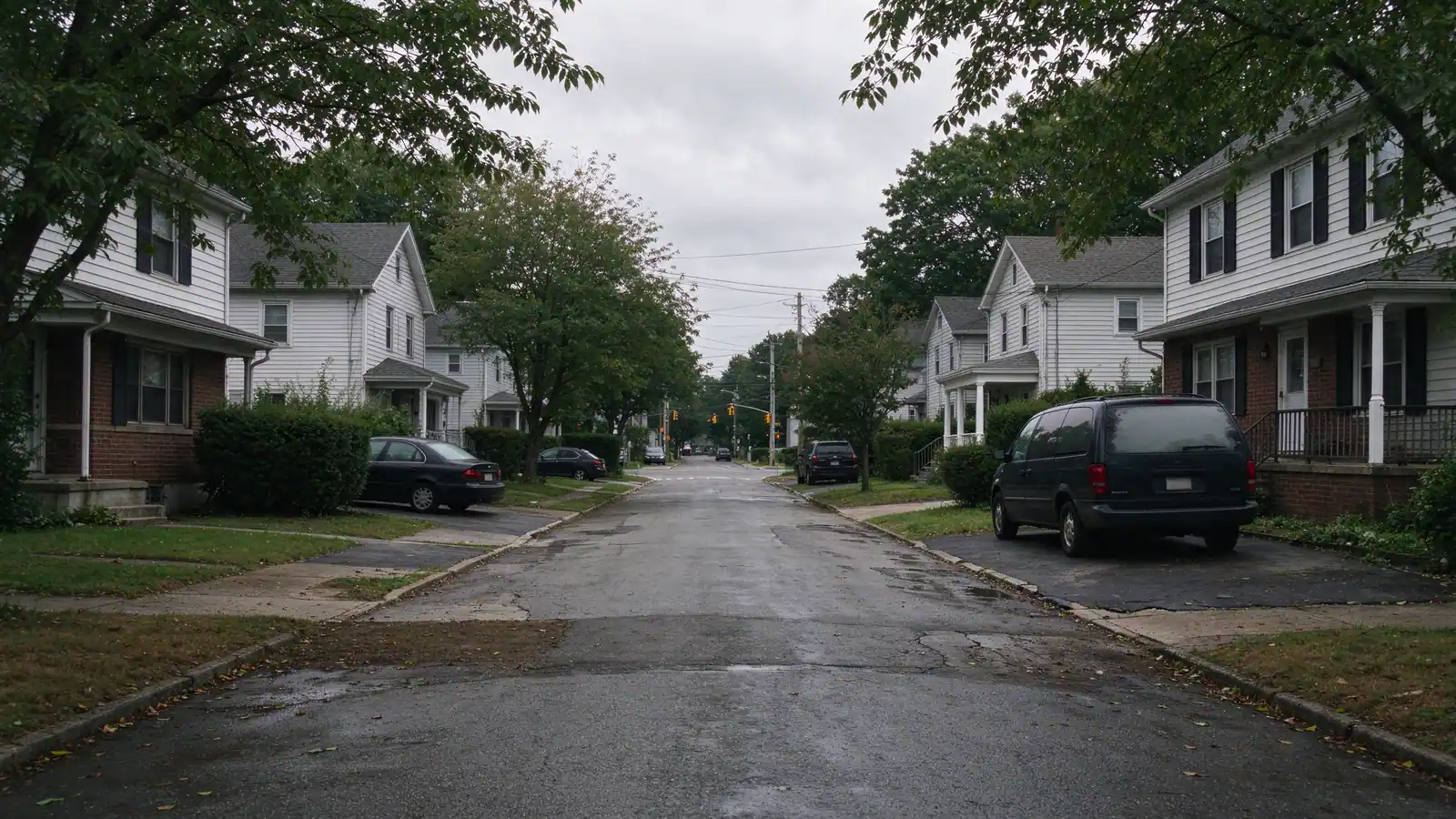
NYC Repipe & Repair handles leak repair and repiping Staten Island homes, most of them detached one- and two-families built after the Verrazzano-Narrows Bridge opened in 1964. City property records show 68% of the borough's one- to four-family houses were built in 1960 or later, with a median year of 1970. That stock is mostly copper rather than galvanized, so the usual call is a pinhole leak. Every repair and repipe is copper, filed in DOB NOW when a permit applies, and priced in writing before work is booked.
What repiping in Staten Island actually involves
Staten Island's houses are a generation younger than the rest of the city's. City property records count 111,436 one- to four-family lots, and 76,066 of them (68%) were built in 1960 or later; the median is 1970, against 1925 in Brooklyn and 1935 in Queens. The turning point was the Verrazzano-Narrows Bridge, whose upper deck opened on November 21, 1964 (Wikipedia: Verrazzano-Narrows Bridge). On the East Shore, building of small one-family homes had started in the 1950s and accelerated rapidly once the bridge opened (Wikipedia: East Shore). Houses from those decades were mostly plumbed in copper rather than galvanized steel, so a whole-house repipe here is less common than in Brooklyn or Queens. DOB NOW shows 22 Staten Island water-repipe filings and 5 riser filings since January 2023, against 406 and 208 in Brooklyn. Demand is lighter, and most Staten Island work starts as a leak.
Copper doesn't rust out like galvanized, but it isn't permanent in NYC water. DEP's annual water quality report puts average hardness around 25 mg/L, which is soft, and the Langelier saturation index at −2.21, which means the water tends to dissolve metal rather than coat it with scale. DEP doses orthophosphate, about 2.2 mg/L, to lay down a protective film, which slows the process without stopping it. After 50 years the result is pinhole leaks: tiny holes that start as a drip or a damp ceiling. Wall thickness matters. Copper tube comes in Types K, L and M, labeled green, blue and red; Type M is the thinnest, and Table 605.4 of the 2022 NYC Plumbing Code doesn't list it for water distribution. Any new copper is Type L or K. A first pinhole is a copper pipe repair. For when it stops being one, see pinhole leaks: repair or repipe.
The North Shore is the exception. St. George, Stapleton and Port Richmond have frame houses from roughly 1900 to 1930, and those can carry the same galvanized supply and lead service lines as older Brooklyn houses. Lead service lines were legal in NYC until 1961, and the owner owns the whole line from the street main. There the job looks like a galvanized pipe replacement, sometimes with the service line replaced at the same time. Elsewhere on the island, a repipe usually follows a run of leaks or a hidden one found by water leak detection under a slab or finished basement. A whole-house copper repipe of a one- or two-family is filed as a Limited Alteration Application at $130 up to $5,000 of work, plus $2.60 per $1,000, or about $169 on a $20,000 job. A short repair of 10 feet of pipe or less is ordinary plumbing work, needs no permit, and is reported by the Licensed Master Plumber on DOB form OP128.
What goes wrong in Staten Island houses
A pinhole leak in 1970s copper. A drip from a ceiling, or a green-crusted spot on a cellar line. Soft, corrosive city water slowly thins copper from the inside, and the thinnest-wall tube fails first.
The second and third pinhole. One pinhole is a repair. Several on the same run within a year or two usually mean the tube wall has thinned along its length, and the next one is a matter of time.
A leak you can't see. Supply lines under a slab floor or behind a finished basement wall. A rising water bill or a damp patch on the floor is often the only sign.
Galvanized on the North Shore. Older frame houses in St. George, Stapleton and Port Richmond predate the bridge by decades and can still have galvanized supply and a lead service line.