NYC Repipe & Repair traces hidden leaks in New York City houses and apartments when the source isn't obvious: a ceiling stain that keeps spreading, a hiss behind a wall, or a DEP bill or leak alert that jumped. Water leak detection here is non-invasive first. Each line is isolated and pressure-tested, moisture readings map where the water is travelling, and walls are opened only where a line is losing pressure. You get the source named, the pipe material identified and a written repair price before work is booked.
What happens on the first visit
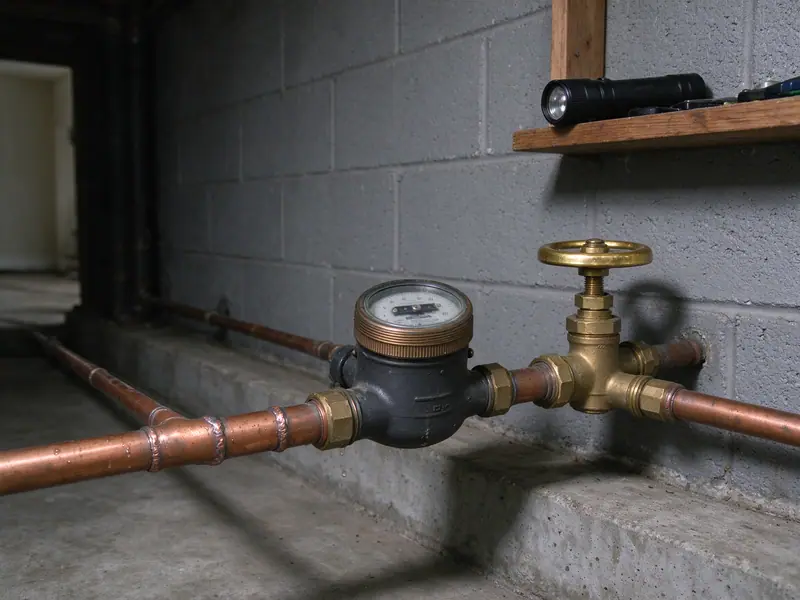
- The water meter read with every fixture off, to confirm water is actually being lost somewhere in the system.
- Hot, cold and each branch isolated in turn and pressure-tested, so the losing line is found without opening walls.
- Moisture readings across the stained ceiling, wall or floor to map where water is travelling from that line.
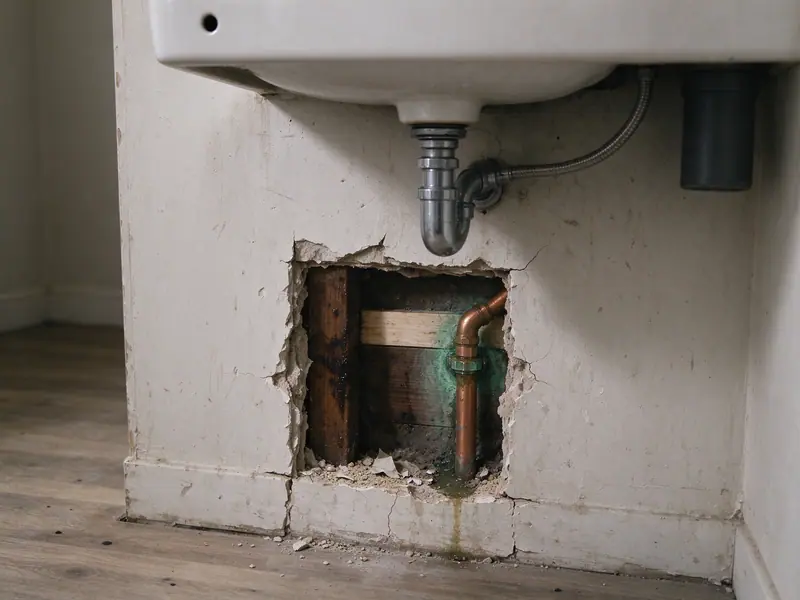
- The source marked on the wall, with the size of any opening and a written repair price, before anything is cut.
Signs you need leak detection, not a guess
Hidden leaks in NYC homes announce themselves in a few predictable ways: a ceiling stain that keeps spreading, paint bubbling low on a wall, a hiss in a chase when every tap is off, or a water bill that jumps. DEP watches the last one for you. Customers enrolled through My DEP Account get an email when use spikes, and DEP reports issuing 47,787 leak alerts in a single year. The same release notes that a continuously running toilet can waste up to 6,000 gallons a day, so the toilets get checked before anyone suspects a pipe.
In apartments, the stain is often someone else’s leak. Water from a riser or a neighbor’s branch line can travel along joists and pipe sleeves before it shows, so the stain marks where water arrives, not where it starts.
How the source is found
Water leak detection here is non-invasive first. The method narrows the search before anything is cut:
- Confirm the loss. With every fixture off, the water meter should stand still. If it moves, water is leaving the system somewhere.
- Isolate each line. Hot, cold and each branch are shut off in turn and pressure-tested one at a time. A line that holds is ruled out. A line that drops is the one leaking.
- Map the moisture. Moisture readings across the stained ceiling, wall or floor show where water is travelling from the losing line.
- Open only where the line is losing pressure. The opening is marked, sized and priced before it is cut, usually as one small square rather than a strip of wall.
Specialist leak-detection firms also use other instruments. Acoustic equipment listens for pressurized water escaping a pipe, and thermal imaging shows temperature differences that work best for tracing hot-water leaks. Pipelineon’s leak detection overview notes that acoustic methods struggle when a line is depressurized, the area is noisy or the leak is too small to hear. That’s why isolating and pressure-testing the lines comes first.
Leaks under a cellar or basement slab follow the same logic, but the repair is different, often a reroute overhead rather than broken concrete. Slab leak repair covers that case.
What leak detection costs and what follows
Published figures put a standard leak-detection visit at about $175–$350 on average (Yelp cost guide). Pipelineon puts slab-leak detection at $600–$900 in high-cost metros. In NYC, the price depends on:
- how many lines must be isolated and tested;
- whether the leak is in a cellar slab, a chase or a ceiling;
- co-op access, where riser shutoffs are scheduled through management.
Once the source is found, the repair is usually short. Up to 10 feet of non-gas water piping is ordinary plumbing work in NYC, with no permit filed and the job reported by the Licensed Master Plumber on OP128. The repair goes in Type L copper or lead-free brass, the materials Table 605.4 of the 2022 NYC Plumbing Code lists. Plumber for water leaks and pipe repair cover that work. Written findings and photos of the failed pipe also help with a claim; is repiping covered by insurance? explains what adjusters look for.
When the leak points to a repipe
Sometimes the testing finds more than one leak. If two branches drop pressure, or the cut-out pipe shows pinholes and thinning well beyond the leak, a single repair won’t hold for long. NYC water is soft and corrosive, with an average Langelier index of −2.21 in DEP’s annual water quality report, so thin copper and old galvanized keep losing metal.
That’s when a repair becomes a replacement:
- Several pinholes on one run point to pipe replacement for that bathroom, floor or riser. Pinhole leaks in copper pipes explains the repair-or-replace call.
- Leaking galvanized at more than one joint points to galvanized pipe replacement.
- Failures on several floors point to whole house repiping.
To price either route, see how much repiping costs in NYC.
What's included
- Meter check with all fixtures off
- Isolation of hot, cold and branch lines
- Pressure test of each isolated line
- Moisture readings around the stain or damp area
- Fixture, valve and supply-connection check
- Opening marked and sized before any cut
- Written findings and photos for your insurer
- Repair priced in Type L copper or brass
A stain that keeps spreading or a bill that jumped? Isolating each line shows which pipe is losing water before a wall is opened. (929) 659-6658