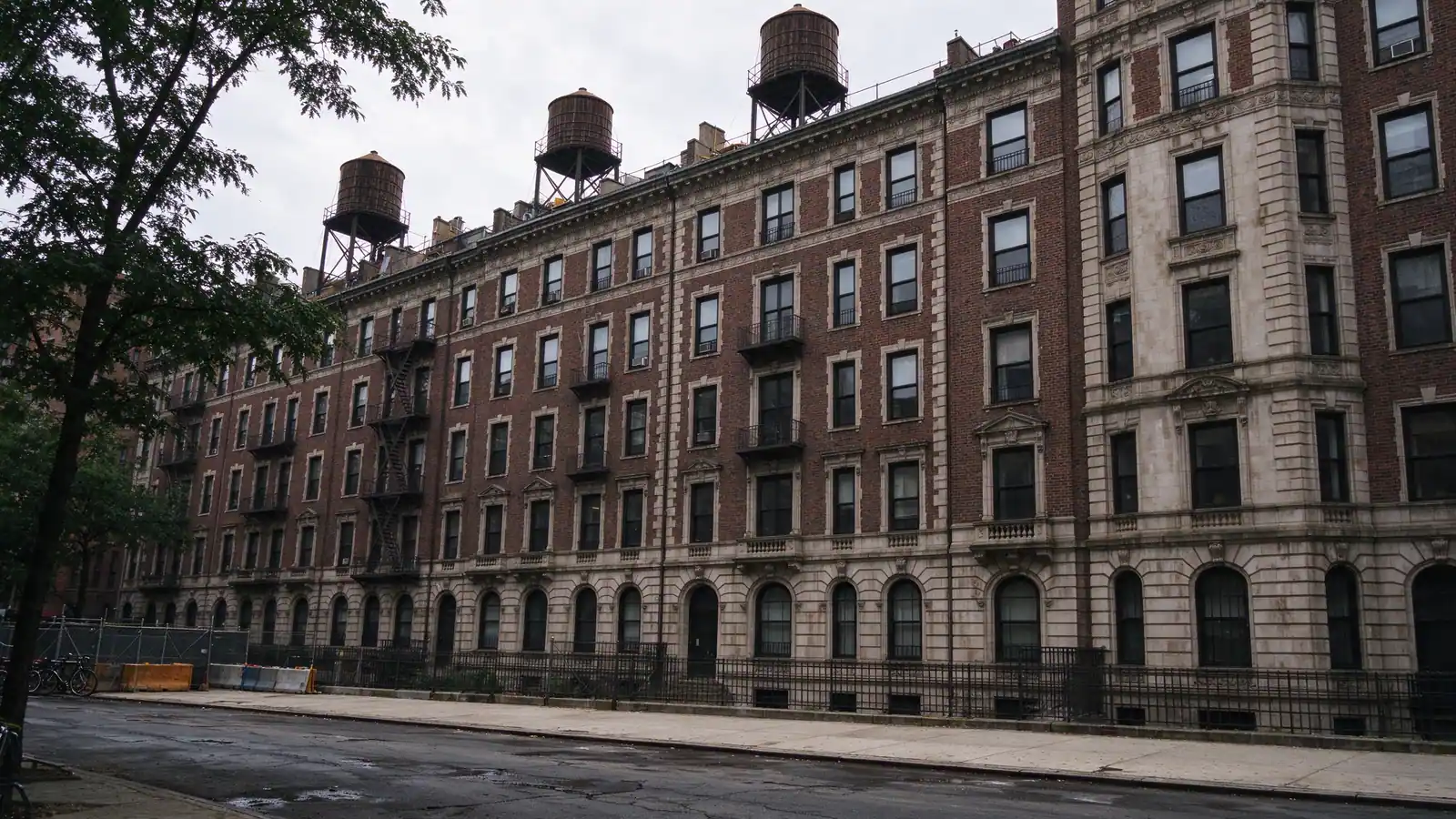
NYC Repipe & Repair takes on repiping Manhattan co-op and condo apartments: the bathroom and kitchen branch lines a shareholder owns, and the building risers a board owns. Manhattan isn't a house market. City property records show 70% of its elevator co-ops and 98% of its walk-up co-ops were built before 1940, and many still have galvanized risers and branch lines. Every job is Type L copper, filed in DOB NOW by a NYC Licensed Master Plumber and planned around your alteration agreement, with a written price before work is booked.
What repiping in Manhattan actually involves
Repiping in Manhattan is mostly apartment work inside prewar buildings. City property records count 1,896 elevator co-op lots and 1,536 walk-up co-op lots in the borough, and 70% and 98% of them respectively were built before 1940. The usual split is that the building owns the risers and the shareholder owns the branch lines from the riser valves to the fixtures, but some alteration agreements now shift riser cost onto the shareholder who is renovating (Habitat: Shifting the Burden). So the first question on any Manhattan job is who owns which pipe, and the answer is in your proprietary lease and alteration agreement, not the code. DOB NOW shows 537 Manhattan water-repipe filings and 964 riser filings since January 2023, the most of any borough on both counts. They cluster on the Upper East Side, where Upper East Side–Carnegie Hill is the busiest neighborhood in the city, and on the Upper West Side.
An apartment repipe replaces the hot and cold branch lines in a bathroom or kitchen back to the riser shutoffs, usually during a renovation while the walls are open. The managing agent schedules the riser shutoff, the building's engineer reviews the plan, and the work runs inside the hours your agreement allows. New pipe is Type L copper joined by solder or permanent press fittings; removable push-fit fittings are prohibited (PC 605.9). On the drain side, plastic pipe is allowed only in residential buildings of five stories or fewer (PC 701.9), so drain work in a taller co-op isn't done in PVC. A typical apartment takes a few days. The job is filed as a Limited Alteration Application in DOB NOW under the fee schedule for buildings other than one- to three-family houses, and where the building sits in a historic district, permitted interior plumbing generally needs a Landmarks Preservation Commission Certificate of No Effect as well. The alteration agreement answer covers the paperwork.
Riser replacement is the building-scale version. Street pressure lifts water only about five to six stories, so most Manhattan elevator buildings pump to a rooftop tank and feed the risers by gravity (Habitat: water tanks). Replacing those risers is usually done as a parallel copper system, line by line from the top down, with daytime shutoffs and branch connections made inside each apartment (Habitat: re-piping). The numbers are large. The Victoria put about $10 million toward risers across 495 units, and a 45-unit West End Avenue co-op spent $2.3 million on its project (Habitat). Published NYC figures run about $5,000 to $12,000 per floor per line, and buildings typically fund the work through assessments or a contractor payment plan, with each shareholder paying for the branch lines inside their own apartment. On the Upper West Side's brownstone side streets in the West 70s and 80s, the job is house-scale again, closer to a brownstone repipe than an apartment one.
What goes wrong in Manhattan buildings
A leak into the apartment below. One failed branch-line joint behind your tile shows up as a stain on your downstairs neighbor's ceiling, and the board wants to know whose pipe it was.
Brown water after every shutoff. When the building shuts a riser for any job, rust knocked loose inside old galvanized comes out of every tap on the line when the water comes back.
A weak shower near the roof. Street pressure lifts water only about five to six stories. Above that the pumps and roof tank take over, and the top floors sit closest to the tank with the least gravity pressure behind them.
Board rules that set the schedule. Alteration agreements fix work hours and require an engineer's review and a certificate of insurance. Some charge for each extra riser shutoff; one co-op charged $1,000.