NYC Repipe & Repair handles apartment repiping in New York City co-ops and condos: the hot and cold branch lines inside your unit, replaced in Type L copper from the building riser to each fixture. In most buildings the shareholder or unit owner owns those branches and the building owns the risers, so this is the part of the plumbing you pay for. The work runs under your alteration agreement, with the board's engineer review, the managing agent's shutoff schedule and the building's working hours built into the plan. Most apartments take a few days on site.
What happens on the first visit
- Every riser serving the apartment located, hot and cold, with the material of each tie-in point noted.
- Pressure and flow checked at each fixture, to separate a branch problem from a riser, pump or roof-tank problem.
- Your alteration agreement checked for engineer review, insurance, hours and shutoff fees.
- A written, itemized price with the shutoff plan and wall openings marked, ready for the board package, before anything is booked.
What you own: branch lines versus risers
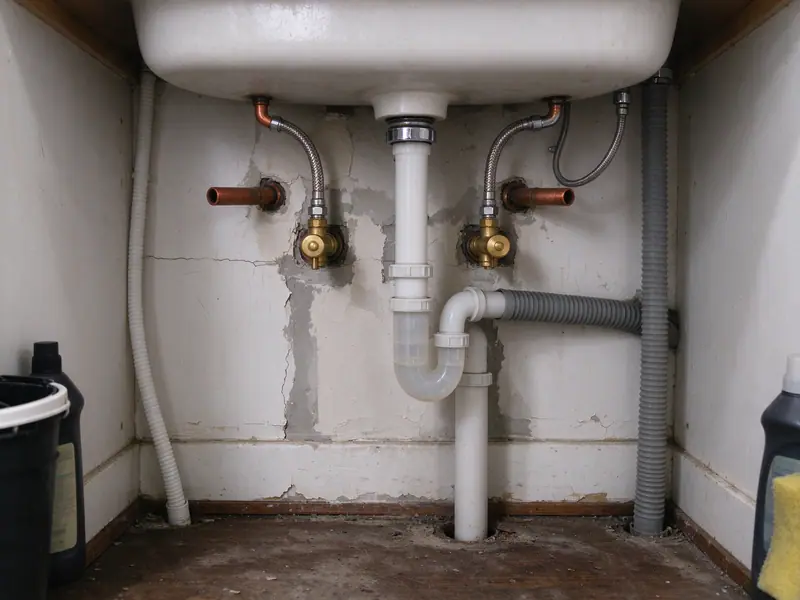
In most New York City co-ops and condos, the plumbing splits at the riser. The vertical risers that carry hot and cold water up through the building belong to the building. The horizontal branch lines that leave the riser and feed your kitchen and bathroom fixtures belong to you. The exact line is set by your proprietary lease or condo declaration and your alteration agreement. Habitat reports that some co-ops now go further and make a renovating shareholder replace the floor-to-floor riser sections inside the apartment as well.
City property records (MapPLUTO) show 70% of Manhattan’s elevator co-ops and 98% of its walk-up co-ops were built before 1940, when galvanized steel was the standard supply pipe. Against a typical working life of 40 to 60 years, original galvanized branches in those buildings are long past it. Typical symptoms: rust-colored water at your taps only, weak flow in one bathroom, or a stain on the ceiling below. If pressure is low throughout the line, start with low water pressure in an NYC apartment, because the cause may be the riser, the roof tank or the pumps rather than your branches.
The alteration agreement and board approval
Apartment repiping is an alteration, so nothing starts until the board signs off. A typical approval package includes:
- The scope and drawings for the managing agent and the building’s engineer, whose review is usually billed to the shareholder.
- A certificate of insurance from the plumbing contractor, with the additional insureds and limits the agreement sets.
- The plumber’s license and the DOB filing. Replacing an apartment’s supply is filed in DOB NOW: Build as a Limited Alteration Application by a NYC Licensed Master Plumber. For co-ops and condos, DOB’s LAA fee chart starts at $195 for work up to $3,000, plus $10.30 per additional $1,000, so a $10,000 job carries a $267.10 fee.
- The schedule, inside the building’s permitted working hours, with noisy work and shutoffs on the days management allows.
Co-op alteration agreement plumbing requirements covers the clauses that matter, including who pays if a riser is damaged during the work.
Riser shutoffs and the tie-in
Every riser connection means shutting that riser down for every apartment on the line, so buildings control it tightly. Shutoffs are booked through the managing agent with notice to neighbors, and some boards charge for each one; one co-op charged $1,000 for each shutoff beyond the first. A kitchen and a bathroom often sit on different risers, each with a hot and a cold side, so the shutoff count adds up quickly.
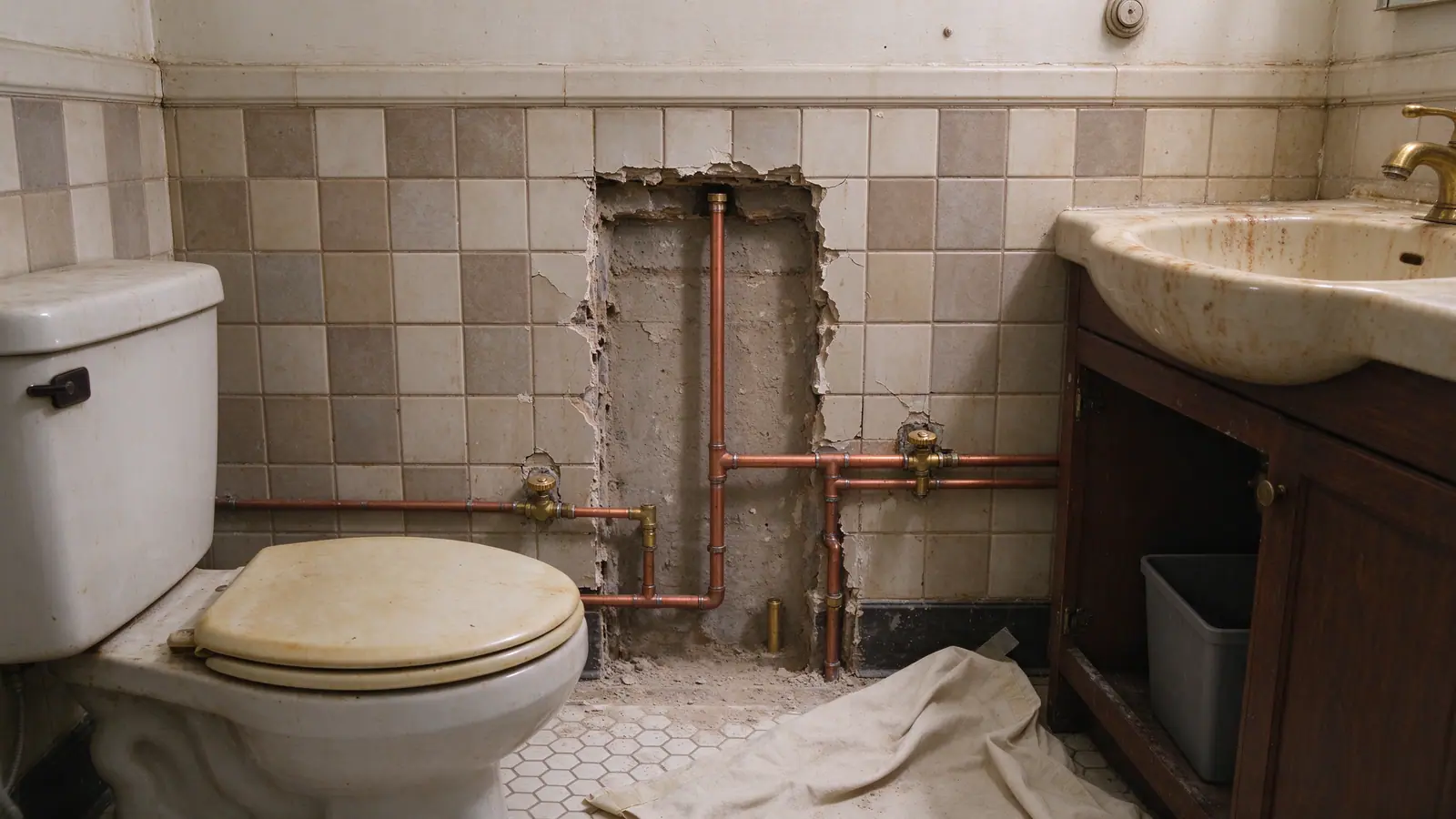
Good planning keeps it to one shutoff per riser. The new Type L copper branch is built out in the apartment first, then each riser is shut down once to cut in a new full-port valve at the tie-in, so later work never needs the riser off again. Joints are soldered or permanent press; removable push-fit fittings are prohibited under PC 605.9, and PEX is not on the code’s list for water distribution (2022 NYC Plumbing Code, ch. 6). Where copper meets a galvanized riser that stays, the joint gets an ASSE 1079 dielectric union or brass fitting (PC 605.24.1). The new branch is pressure-tested before walls close, and water is normally restored at the end of each working day.
Cost, and when it becomes a riser job
NYC contractors publish copper apartment repipes at $3,000 to $8,000 (The Plumber NYC), and supply replacement at $3,000 to $7,000 per unit (handyman-new-york-city.com). The price moves with the number of bathrooms, the distance from each riser, tile and plaster that has to be opened and restored, and the building’s own costs: engineer review, shutoff fees and restricted hours. Cost to repipe an apartment in NYC breaks these down.
The cheapest time is during a kitchen or bath renovation; see repiping during renovation. If only one bathroom’s branch is failing, partial pipe replacement may be enough.
If the riser itself is leaking or the whole line has brown water, new branches won’t fix it. That’s a building project for the board, covered on the water riser replacement page, and who pays for riser replacement in a co-op explains how the cost is usually split. For local building stock, see Manhattan, the Upper East Side and the Upper West Side.
What's included
- Type L copper branch lines from each riser to each fixture
- New full-port valves at every riser tie-in
- Lead-free valves and fittings certified to NSF 372
- Dielectric or brass transitions where a galvanized riser stays
- DOB NOW LAA filing by a NYC Licensed Master Plumber
- Certificate of insurance and documents for the board package
- Riser shutoffs coordinated with the managing agent
- Pressure test before walls are closed
Weak shower, rusty sink, or both? A fixture-by-fixture pressure check shows whether it's your branches or the building's riser. (929) 659-6658