NYC Repipe & Repair replaces the water service line in New York City houses and small buildings: the pipe that runs from the city main in the street, under the sidewalk, to the meter in your cellar. Water line replacement is needed when that pipe leaks, is lead or galvanized, or is too narrow to carry the flow the house needs. DEP is clear that the property owner owns the whole line, so a water line repair or replacement is the owner's job, done by a NYC Licensed Master Plumber with DEP and DOT permits.
What happens on the first visit
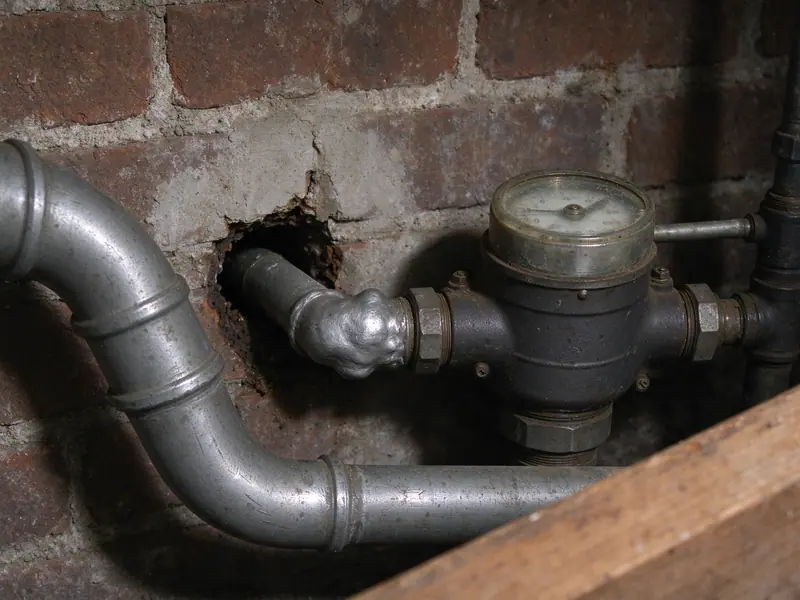
- The service line checked where it enters the cellar: material (lead, galvanized or copper), size and the condition of the meter valves.
- Flow and pressure read at the meter to see whether the line itself is limiting the house.
- Your address checked against DEP's service line records and, if you have a DEP letter, the free replacement program.
- A written price covering the trench, sidewalk restoration and DEP and DOT permits, before anything is booked.
Your “water main” is the service line
Homeowners often call it the water main, but the main is DEP’s pipe under the street. The pipe that runs from that main, under the sidewalk, to the meter in your cellar is the water service line, and DEP states that property owners own it and are responsible for it. Water main replacement or water main repair on the private side is the owner’s job.
There are four common reasons to replace it:
- Lead. Lead service lines were legal in NYC until 1961, and lead patch repairs were allowed until 2009. DEP’s lead service line replacement plan counts about 121,000 lead or galvanized-requiring-replacement lines and about 118,000 of unknown material.
- Galvanized steel that has rusted down to a narrow bore, causing low water pressure throughout the house.
- A leak. If DEP suspects one on your line, it can issue a notice giving you three days to hire a Licensed Master Plumber. After that, the water is shut off and a $1,000 fee applies.
- Undersized pipe that can’t feed a house with more bathrooms than it was built with.
How to tell if you have lead pipes shows how to check the line where it enters the cellar.
How a service line is replaced
A water service line in NYC involves more agencies than interior plumbing. Under PC 106.6, the work needs a DEP permit for the water connection and a DOT permit for opening the sidewalk or street, and the Licensed Master Plumber obtains both before the work starts. The service pipe must meet DEP’s standards (PC 605.3). Underground water pipe under Table 605.4.1 is limited to Type K copper, brass, ductile iron and stainless steel, and for a house-size line that means Type K copper.
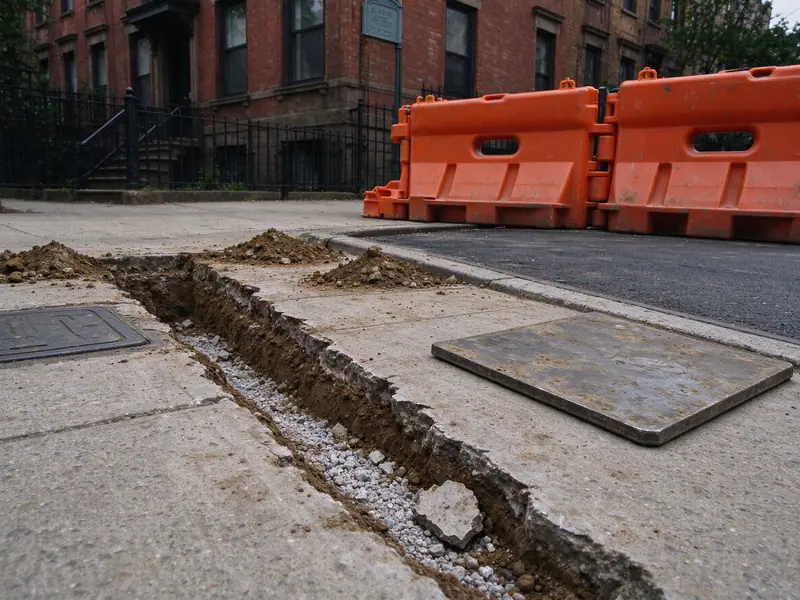
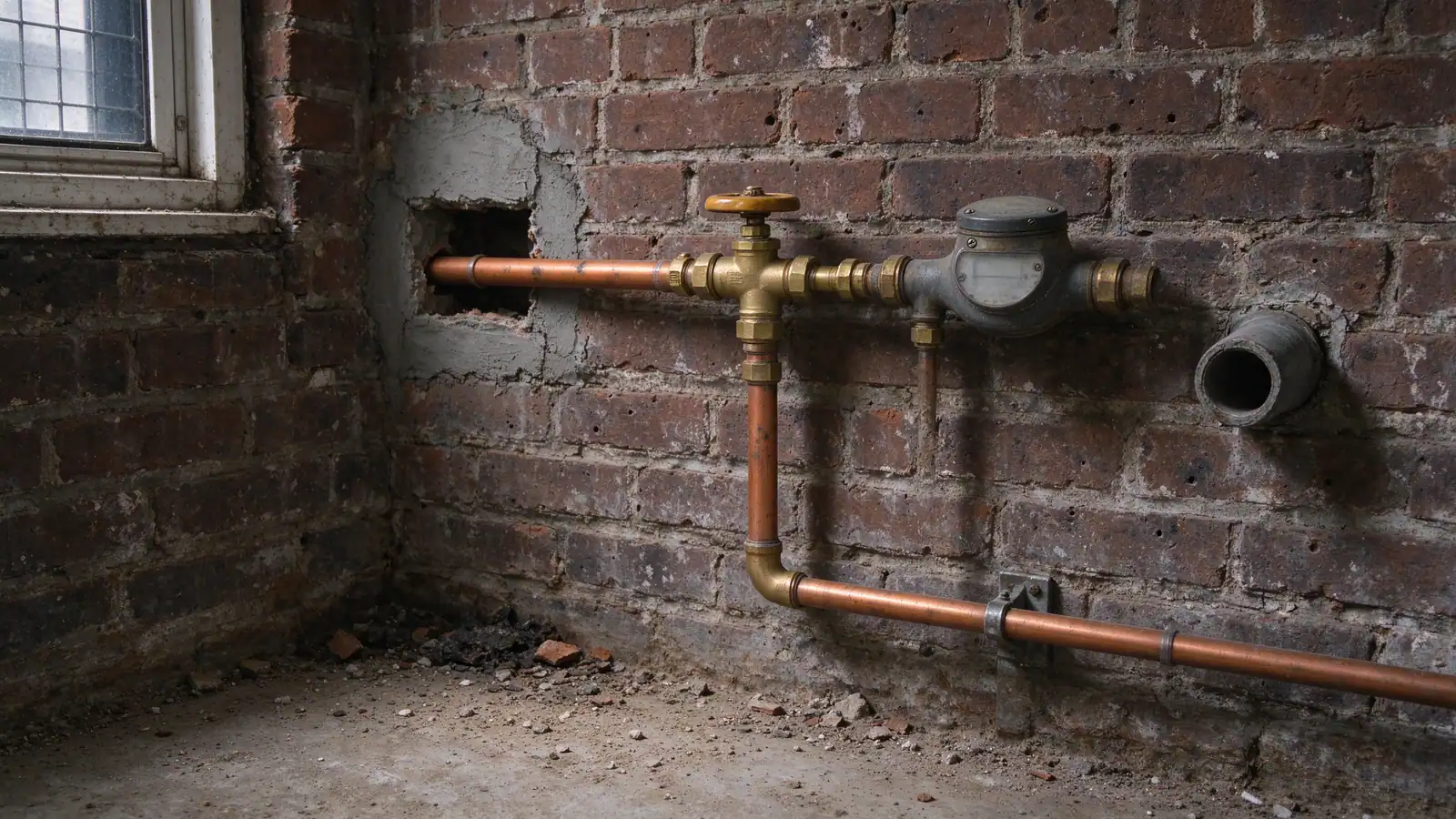
The job runs in this order: permits, then a trench from the curb to the foundation, then the new copper line through the wall to new valves at the meter. The line is pressure-tested before the trench is backfilled and the sidewalk restored. Stoops, areaways and street trees can change the route, so they’re checked on the first visit. Water is off while the new line is connected, so the day is planned in advance.
What drives the cost
One NYC price guide puts a main water service line, building to street, at $8,000–$25,000 (Handyman NYC price guide). DEP’s plan puts a privately hired lead service line replacement at $5,000–$10,000. Where a job falls depends on:
- the length of the run and the depth of the main;
- sidewalk, curb and street restoration;
- obstructions such as stoops, vaults and tree pits;
- the connection inside, including any new valves and the tie-in to the house piping.
Some owners don’t pay at all. DEP’s free replacement program covers lead and galvanized-requiring-replacement lines, but only for owners who get a DEP letter or are contacted by DDC during main work. It started in the Bronx, with Flushing in Queens and Borough Park as later phases. Free lead pipe replacement in NYC covers eligibility, and the lead service line cost guide covers the private route. Repairs may also be covered by homeowners insurance or by DEP’s Service Line Protection Program if you’re enrolled.
When the service line is only half the job
A new copper service line carries full flow to the meter. If the pipe beyond it is still rusted galvanized or lead, the house won’t get the benefit. Pressure upstairs stays weak, and brown water still comes out after the taps sit. And where the old service line was lead, older lead or galvanized pipe inside the house can still be a concern after the new line goes in.
That’s why the service line and the interior piping are often priced together. Lead service line replacement covers lead lines specifically. Galvanized pipe replacement swaps the steel inside the house, and whole house repiping replaces every supply line from the meter to the fixtures in Type L copper. Doing both at once means one plan, one set of openings and full pressure from the street to the top floor.
What's included
- New service line in Type K copper
- DEP permit for the water connection
- DOT sidewalk or street-opening permit
- New valves at the meter
- Tie-in to the house piping in copper or brass
- Trench backfill and sidewalk restoration
- Pressure test before the trench is closed
- Old lead or galvanized line removed or capped
Weak pressure in every room, or a DEP letter about your service line? A check at the meter shows what the line is made of. (929) 659-6658