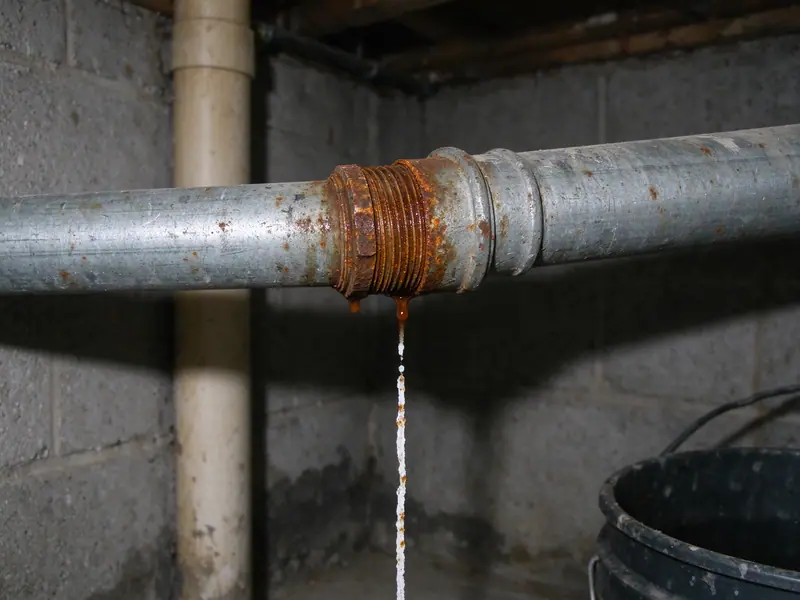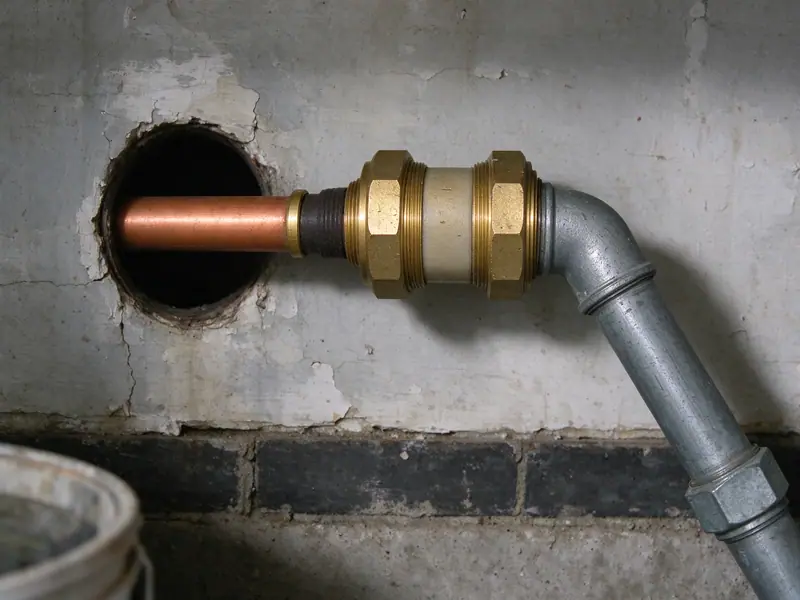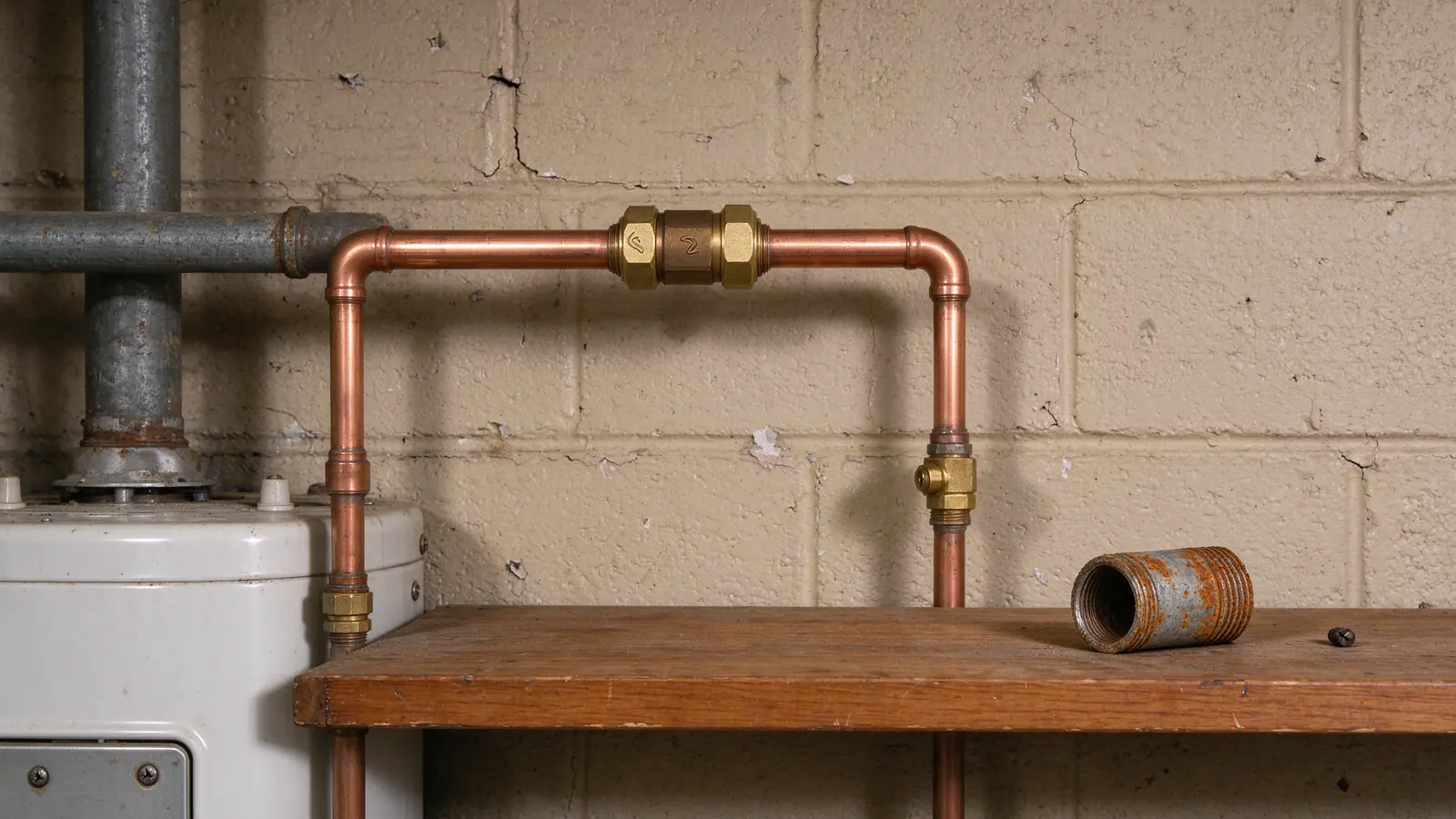
NYC Repipe & Repair repairs leaking and damaged water pipe in New York City homes: a dripping threaded joint in the cellar, a corroded galvanized nipple at the water heater, a cracked fitting behind an access panel. Pipe repair here means the failed section is cut out and replaced in Type L copper or lead-free brass, the materials the 2022 NYC Plumbing Code lists, not wrapped, clamped or pushed together. Before anything is booked, you get a written, itemized price and a straight read on whether the pipe around the repair is sound.
What happens on the first visit
- The damaged section examined and the pipe material confirmed: galvanized steel, brass, lead, Type M or Type L copper.
- The pipe on either side of the failure checked for thinning, rust or flaking, so the repair joins sound metal.
- Valves located so the repair can be isolated with as little of the home shut down as possible.
- A written, itemized price, including any access opening, before the repair is booked.
What fails in NYC water pipe
A plumbing pipe leak in New York City usually traces back to the age of the building. MapPLUTO shows 74% of Brooklyn’s one- to four-family lots were built before 1940, and the Bronx’s houses have a median build year of 1940. Galvanized steel was the standard supply pipe for that era, and published working lives for it run about 40 to 60 years. The failures that bring people to a pipe repair are predictable:
- Threaded galvanized joints and short nipples, often at the water heater or boiler, where heat and threading leave the least metal.
- Rust-through on galvanized runs in damp cellars and exterior walls.
- Pinholes and weeping joints in older copper, especially thin-wall Type M.
- Cracked or seized fittings and valves that fail when someone finally turns them.
NYC water speeds this up. DEP’s annual water quality report gives an average Langelier index of −2.21, which means the water tends to dissolve metal rather than coat it.
How a code repair is made
A leaking pipe repair in NYC is a cut-out and replacement, not a wrap. The 2022 NYC Plumbing Code sets the terms:
- Materials. Table 605.4 lists brass, copper and copper-alloy pipe, and copper tubing Types K and L. Galvanized steel, PEX, CPVC and Type M copper are not on it, so a galvanized pipe repair is made in Type L copper or brass.
- Joints. Solder or permanent press fittings made with a manufacturer-certified tool (PC 605.14.5). Removable push-fit couplings are prohibited (PC 605.9).
- Transitions. Where new copper meets old steel, PC 605.24.1 calls for a brass fitting, a dielectric fitting or an ASSE 1079 dielectric union.
- No lining. PC 701.10 bans cured-in-place and epoxy pipe lining, so a “no-walls” lining pitch is not code work here. Pipe lining vs repiping covers the rule.
The cut is made back to sound metal, not just past the drip. If the pipe flakes or crumbles a few inches out, that is recorded and shown to you, because it changes what the repair is worth. Repaired systems are tested under the code’s testing rules (PC 108.4.1) before walls close. Copper pipe repair covers copper-specific failures, and copper vs PEX in NYC explains why plastic is off the table.
Permits and what drives the price
Most water pipe repair in NYC needs no permit. DOB treats repair or replacement of up to 10 feet of non-gas water piping as ordinary plumbing work, reported by the Licensed Master Plumber on form OP128. Beyond that, the work is filed as a Limited Alteration Application in DOB NOW: Build. For a one- to three-family house, the fee starts at $130 for work up to $5,000.
The price of a repair is set less by the pipe than by getting to it:
- Access. An open cellar ceiling is quick. Tile, plaster and lath, or a finished ceiling below a bathroom add time and restoration.
- Shutoffs. In co-ops, riser shutoffs are scheduled through management, and some boards charge for extra ones. One co-op charged $1,000 per additional shutoff.
- Transitions. Joining copper to badly rusted galvanized can mean replacing more pipe to reach sound threads.
Every repair is quoted as a written, itemized price before it’s booked. If you’re searching for pipe repair near you, check that the work is filed or done under a NYC Licensed Master Plumber, and ask what it will be made of. In NYC the answer should be copper or brass.
When pipe repair becomes a repipe
A repair is the right answer when the pipe around it is sound. It stops being the right answer when:
- the same run has leaked more than once in a year;
- the cut-out section shows rust or thinning well beyond the leak;
- the water runs brown after sitting overnight, a sign the galvanized is rusting through from inside;
- pressure on the upper floors is falling.
Then the money is better spent replacing the run than patching it. Pipe replacement covers one bathroom, kitchen or floor. Galvanized pipe replacement swaps all the steel for copper, and should I replace galvanized pipes? walks through the decision. For a house where every floor is failing, see whole house repiping.
What's included
- Failed section cut out back to sound pipe
- Replacement in Type L copper or lead-free brass
- Soldered or permanent press joints, never push-fit
- Brass or ASSE 1079 dielectric transition to steel
- New shutoff valve where an old one has seized
- NSF 372 lead-free fittings on drinking water
- Leak check under pressure before close-up
- OP128 reporting for ordinary plumbing work
One leaking joint, or the first of many? A look at the pipe either side of the repair tells you which. (929) 659-6658