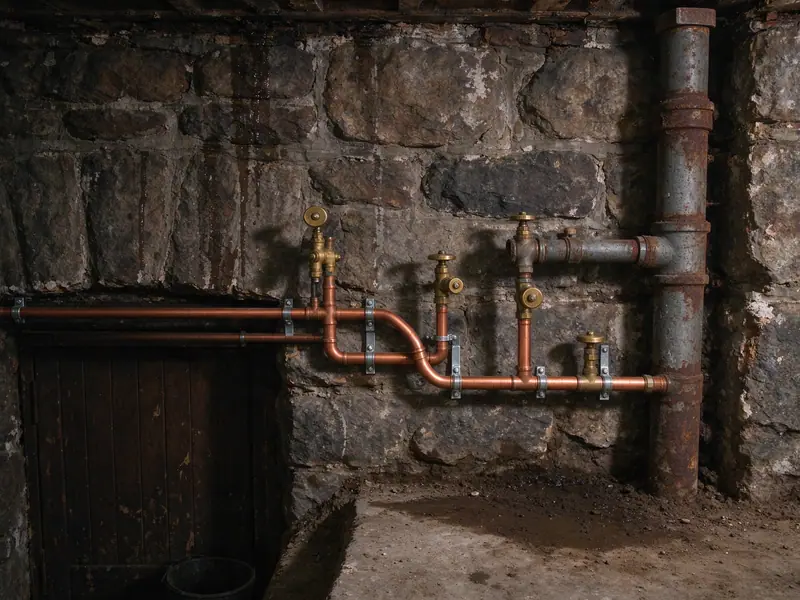
NYC Repipe & Repair repipes New York City brownstones and rowhouses from the cellar to the top floor in Type L copper. Brownstone repiping is its own job: four stories of vertical pipe, plaster and lath instead of drywall, a kitchen that may sit on the parlor floor, and often a lead service line under the stoop and areaway. Many of these houses also sit in landmark districts, which adds a Landmarks Preservation Commission filing. Published NYC prices for a brownstone run $15,000 to $35,000.
What happens on the first visit
- Pressure readings at the cellar meter and the top-floor shower, so the loss across four stories is measured.
- The service line checked where it enters under the stoop, and its material identified.
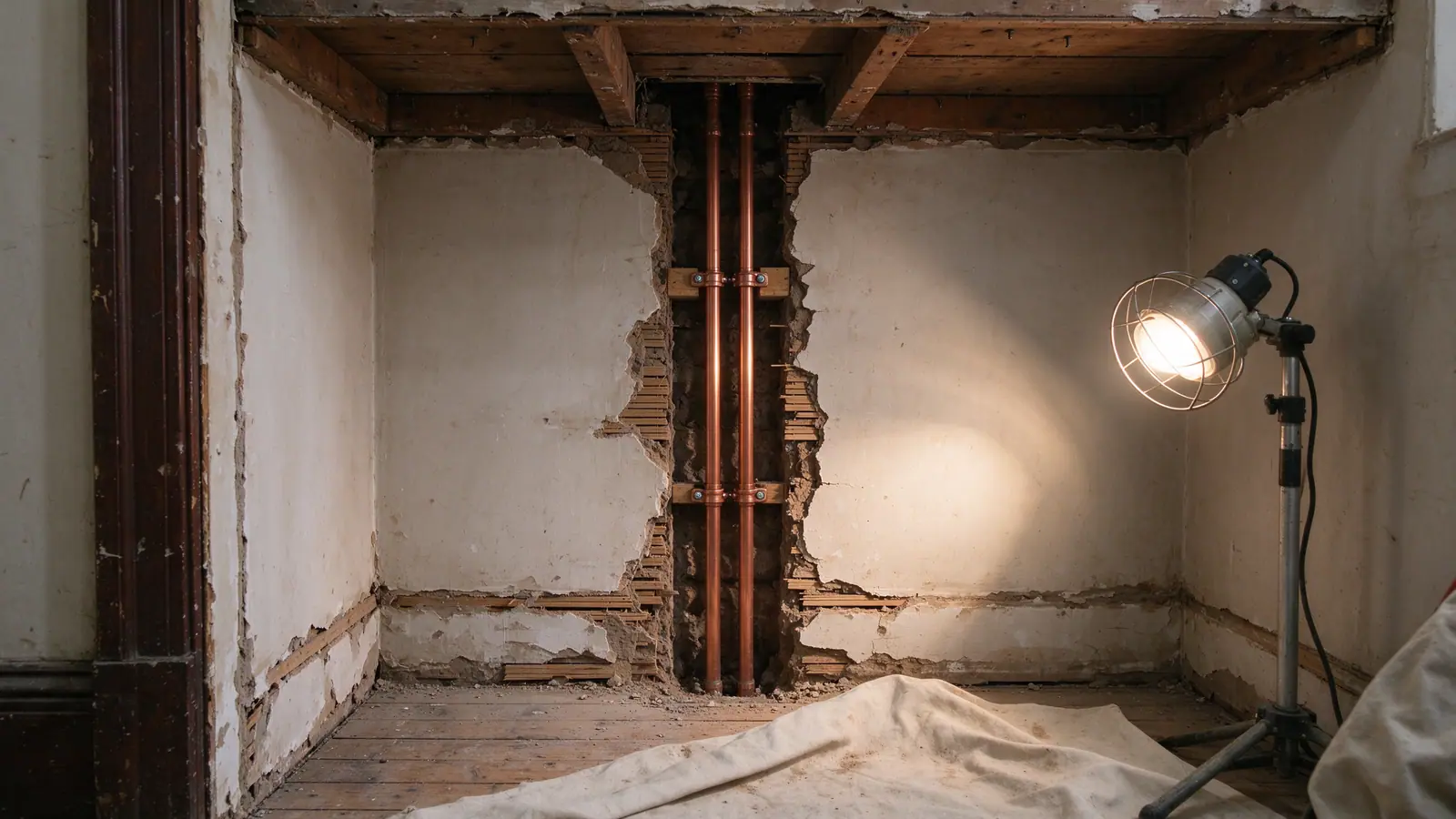
- Riser routes planned through stacked closets and chases, with each plaster opening marked.
- A landmark-district check and a written price covering permit, testing and openings.
Why brownstone plumbing fails the way it does
City property records (MapPLUTO) show 19% of Brooklyn’s one- to four-family lots were built before 1910, and 74% before 1940. A rowhouse from that era in Park Slope or Bed-Stuy was usually plumbed in galvanized steel, which typically lasts 40 to 60 years, and often fed by a lead service line, legal in NYC until 1961 (DEP lead service line plan).
Water loses 1 psi for every 2.31 feet it climbs, so the top-floor shower starts with less pressure before rust narrows the pipe, and balanced-pressure shower valves need 20 psi (Table 604.3). Weak pressure upstairs and brown water after a night off both point to galvanized pipe replacement, not another patch.
How the copper goes in
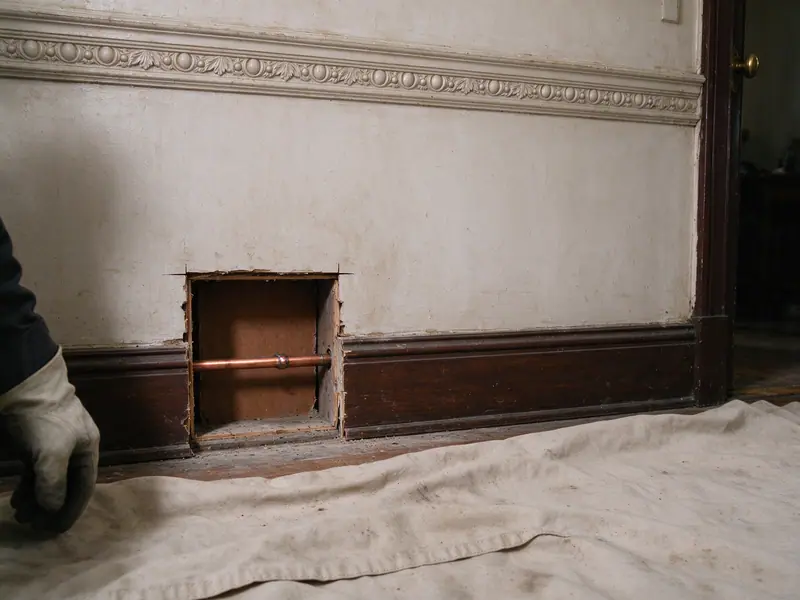
A new Type L copper system runs parallel to the old one. Risers go up through stacked closets, chases and bathroom walls; the parlor-floor kitchen gets its own branch. Plaster and lath is opened in clean squares so it can be restored flat. The old pipe stays live until each section is switched over, so the house is normally back on water at the end of each working day, and the job typically takes five to ten working days.
Four stories of hot pipe also mean a long wait upstairs; a return loop can go in while the risers are open (hot water recirculation). The method is otherwise the same as whole house repiping.
The lead line, landmarks and the price
The service line usually enters under the stoop or areaway, and the owner owns all of it. One 1901 Park Slope listing noted the owners had “re-plumbed to remove lead pipes, even the main line under the sidewalk” (Brownstoner). That’s lead service line replacement, and some owners qualify for free replacement.
In a landmark district, work that needs a DOB permit but doesn’t change protected features needs an LPC Certificate of No Effect; NYC’s landmark guidance lists installing plumbing as an example.
Published prices for a brownstone copper repipe run $15,000–$35,000 (The Plumber NYC); the DOB fee on a $30,000 job is $195. See repiping cost in NYC or the cost estimator.
What's included
- Type L copper risers and branches, cellar to top floor
- New fixture shutoffs and a full-port main valve
- Lead-free valves and fittings to NSF 372
- Plaster openings cut square for clean restoration
- DOB NOW permit filed by a NYC Licensed Master Plumber
- LPC Certificate of No Effect coordinated where required
- Pressure test before any wall is closed
- Optional hot water return loop, priced separately
Strong pressure in the cellar, a trickle on the top floor? A two-point pressure reading shows whether the risers are done. (929) 659-6658