Skip to content

Slab Leak Repair in NYC Cellars and Slab Houses

For a water bill that jumped, a meter that turns with every tap closed, or a damp patch on a concrete floor.

By NYC Repipe & Repair · Last reviewed

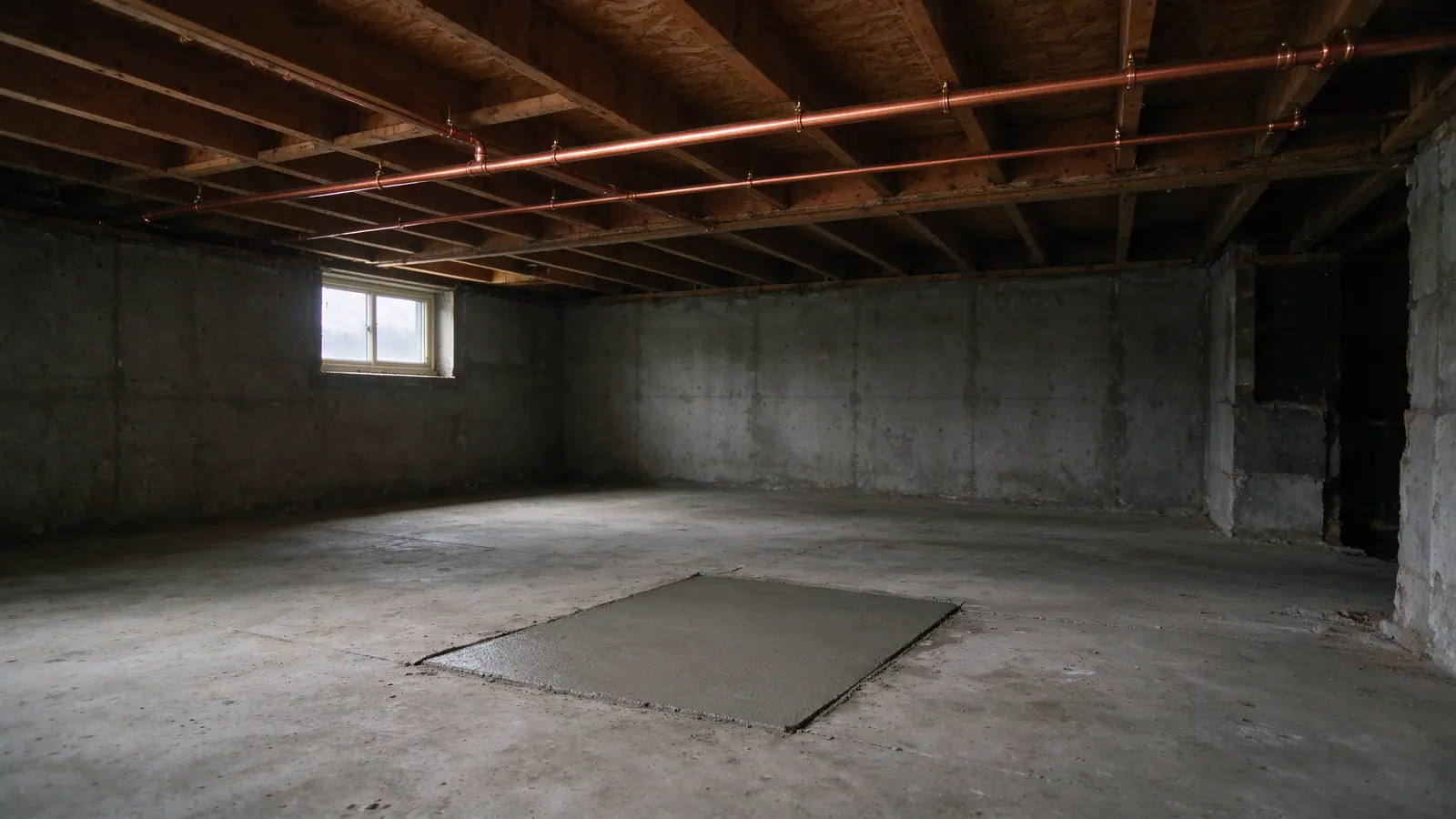
New copper runs along a cellar ceiling above a patched concrete slab
New copper runs along a cellar ceiling above a patched concrete slab. Illustrative.

NYC Repipe & Repair handles slab leak repair for New York City houses where a supply or drain line runs under concrete: a rowhouse's cellar or basement slab, or the floor of a slab-on-grade house in Queens or Staten Island. The leak is located before any concrete is cut. Then the line is either abandoned and rerouted overhead in Type L copper, or exposed through one planned opening and repaired. Typical signs are a jump in the water bill or a damp patch of floor.

What happens on the first visit

  1. A meter check with every fixture off, to confirm water is leaving.
  2. Hot and cold lines isolated and pressure-tested separately, so the leaking run is known.
  3. The buried route traced and the cellar ceiling checked for a reroute path.
  4. A written price for both options, reroute or open the slab, before work is booked.

What a slab leak means in an NYC house

Few NYC houses sit on a slab like a Sun Belt ranch. The buried pipe is usually in the cellar: a supply line or water service running under the cellar or basement floor, or a cast iron drain on its way to the sewer. Or it’s a slab-on-grade house in Queens or Staten Island.

Buried pipe fails like pipe in a wall, only unseen. NYC water is soft and corrosive: DEP’s annual water quality report puts the average Langelier index at −2.21, which eats older copper from the inside, so buried lines show the same pinhole pattern. Galvanized rusts through, and old drains crack, which is a cast iron stack question.

Locate first, then reroute or open the slab

Every fixture is shut and the meter read; then hot and cold lines are isolated and pressure-tested separately, the same discipline as any water leak detection job. The equipment-trade guide Pipelineon puts slab leak detection at $600–$900 in high-cost metros.

Then there are two fixes:

  • Reroute overhead. The buried line is capped, and new Type L copper runs along the cellar ceiling. No concrete is broken.
  • Open the slab. Where the line must stay below the floor, as a water service usually does, one planned opening is cut and patched. Underground water pipe is limited by Table 605.4.1 of the NYC Plumbing Code to Type K copper, brass, ductile iron or stainless steel.

Epoxy lining is not an option: PC 701.10 prohibits it (pipe lining vs repiping). A leak on the service line itself becomes water line replacement.

Permits, insurance and when it becomes a repipe

Repairing 10 feet of pipe or less is ordinary plumbing work with no permit. A longer reroute is filed in DOB NOW as a Limited Alteration Application, and an active leak can be fixed first under an Emergency Work Notification (permit tiers). Insurance usually pays for sudden water damage, not the worn-out pipe (what adjusters look for).

A second leak in the same buried system, or galvanized still running overhead, means the slab leak is a symptom. At that point whole house repiping costs less than chasing the next one.

What's included

  • Leak isolation and pressure testing by line
  • Reroutes in Type L copper (ASTM B88)
  • Type K copper for pipe that stays underground
  • Concrete cut and patch for slab openings
  • Lead-free fittings and valves to NSF 372
  • Dielectric or brass transitions to old steel
  • Permit filed by a NYC Licensed Master Plumber where required
  • Final pressure test before closing up
Water bill jumped and nothing is dripping? A meter test with every tap closed shows whether something under the floor is leaking. (929) 659-6658
The permit trail

What a legal NYC repipe leaves on the record

Every permitted repipe produces the same paper trail at the Department of Buildings. It's what a buyer's attorney, a co-op board or a lender will look for later.

  1. DOB NOW: Build Filed

    Limited Alteration Application

    Filed by the Licensed Master Plumber, with the scope and the job cost.

  2. DOB Issued

    Work permit

    Issued in real time for most repipes, and posted at the job.

  3. On site Installed

    Type L copper in

    Run alongside the old pipe and switched over section by section.

  4. Plumbing Code §108 Tested

    Pressure test

    The whole new system holds under test before walls close.

  5. DOB Signed off

    Inspection and sign-off

    The job closes cleanly on the building's DOB record.

Three ways it gets done

Patch, cheap repipe, or permitted copper

Three ways NYC pipe work gets done. Only one survives a co-op board, a refinance and the next winter.

What matters DIY patchCheap operatorPermitted copper job
Pipe material Whatever the hardware store sells, often PEXPEX or thin Type M copper to save moneyType L copper, listed in NYC Plumbing Code Table 605.4
Fittings Push-fit connectors (prohibited, PC 605.9)Mixed: some push-fit, some solderSoldered or permanent press joints; dielectric unions at steel
Who may legally do it Not the owner: NYC requires a Licensed Master PlumberOften unlicensed, or a licence borrowed for the filingA NYC Licensed Master Plumber, or a crew under one
Permit NoneOften skipped (penalties start at $520, or $6,000 in 3+ family buildings)Filed in DOB NOW and signed off
Pressure test NoneRarelyWhole system tested before walls close
Co-op or condo board Will not approveUsually rejected at the insurance-certificate stageMeets typical alteration-agreement requirements
At sale or refinance Unpermitted work can surface in inspectionOpen DOB issues can delay closingA clean DOB record for the job

Sources: 2022 NYC Plumbing Code, Chapter 6; NYC DOB LAA fee and penalty charts (1–3 family, other buildings).

From the field

What slab leak repair looks like in an NYC house

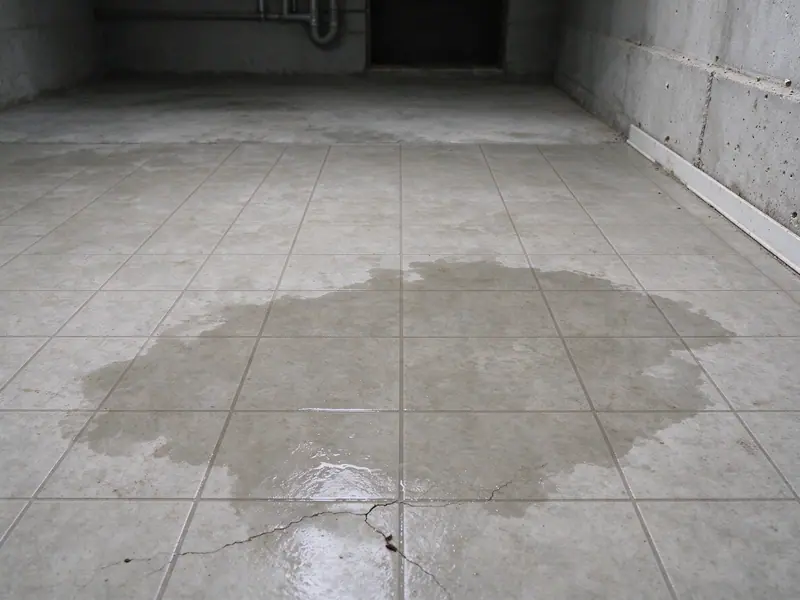
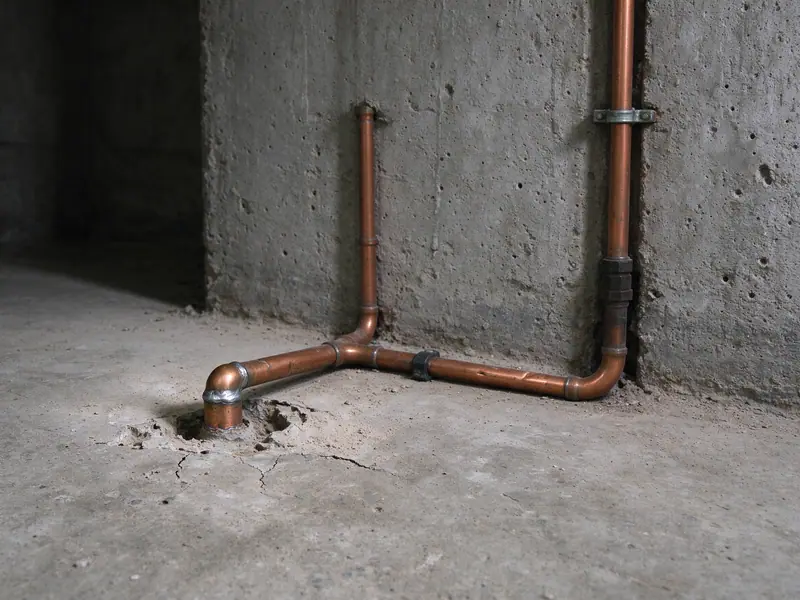
Illustrative photographs of typical conditions and the copper that replaces them.

A warm damp patch spreading on a vinyl tile floor in a Queens basement with a slight crack in the concrete slab beneathA copper line cut and capped with a soldered copper cap where it once entered a concrete basement floor, beside a new copper line rising up the wall

Answered

Slab Leak Repair, answered

Is it better to reroute the pipe or break the slab?

Rerouting is usually better when there is a path. New Type L copper along the cellar ceiling avoids cutting concrete and leaves no pipe buried where the next leak would hide. Opening the slab makes sense when the line must stay below the floor, as a water service usually does.

Does homeowners insurance cover a slab leak?

Usually the water damage, not the pipe. Homeowners policies generally cover sudden, accidental water damage, such as a soaked finished basement, but not replacing pipe that wore out. Ask your adjuster how access costs, like cutting the slab, are handled before work starts, and keep the estimate itemized.

Can a slab leak be fixed with epoxy pipe lining?

Not in New York City. The 2022 NYC Plumbing Code prohibits cured-in-place and epoxy spray pipe lining (PC 701.10). A buried line is either replaced in a code-listed material, Type K copper for underground water pipe, or abandoned and rerouted. Lining offered as a no-dig fix isn't code work here.

Does slab leak repair need a DOB permit?

It depends on length. Replacing 10 feet of pipe or less is ordinary plumbing work: no permit, reported by the Licensed Master Plumber on OP128. A longer reroute is filed in DOB NOW as a Limited Alteration Application. An active leak can be fixed first under an Emergency Work Notification.

Who actually does the plumbing work?

In New York City, permitted plumbing work must be performed by a NYC Licensed Master Plumber or by workers under an LMP's direct supervision, and the LMP files the permit in DOB NOW. Ask any contractor for the LMP's licence number before work starts, and check it on the DOB's public licence search.

Get your slab leak repair priced in writing

Pressure measured, pipe identified, an itemized price including the DOB permit.

The job · step 1 of 2
☎ (929) 659-6658 Free estimate