NYC Repipe & Repair repipes two-family houses across New York City, replacing the hot and cold supply for both units in Type L copper under one DOB permit. Two family house repiping differs from a one-family job in three ways: the house may have one water meter or two, one floor is often tenant-occupied and has to stay on water, and each unit may have its own water heater. The common stock is interwar attached brick in Queens and semi-detached houses in Brooklyn.
What happens on the first visit
- Pressure readings in both units, so the upstairs loss is measured, not guessed.
- Meters, water heaters and the service line located, and pipe material identified.
- Routes planned for each unit, with shutoffs scheduled around the tenant.
- A written price for both units, including the permit and testing, before booking.
The houses and why they need it
The typical NYC two-family is interwar. In Queens, 59% of one- to four-family lots were built between 1920 and 1949, median 1935 (MapPLUTO): the attached brick of Jackson Heights and Sunnyside, the brick rowhouses of Ridgewood, the two-families of South Ozone Park. In Brooklyn, Bensonhurst and Bay Ridge have 1910s–1930s attached and semi-detached brick. Nearly all were plumbed in galvanized steel, which typically lasts 40 to 60 years, and soft, corrosive city water speeds the decline: DEP’s annual water quality report puts the average Langelier index at −2.21.
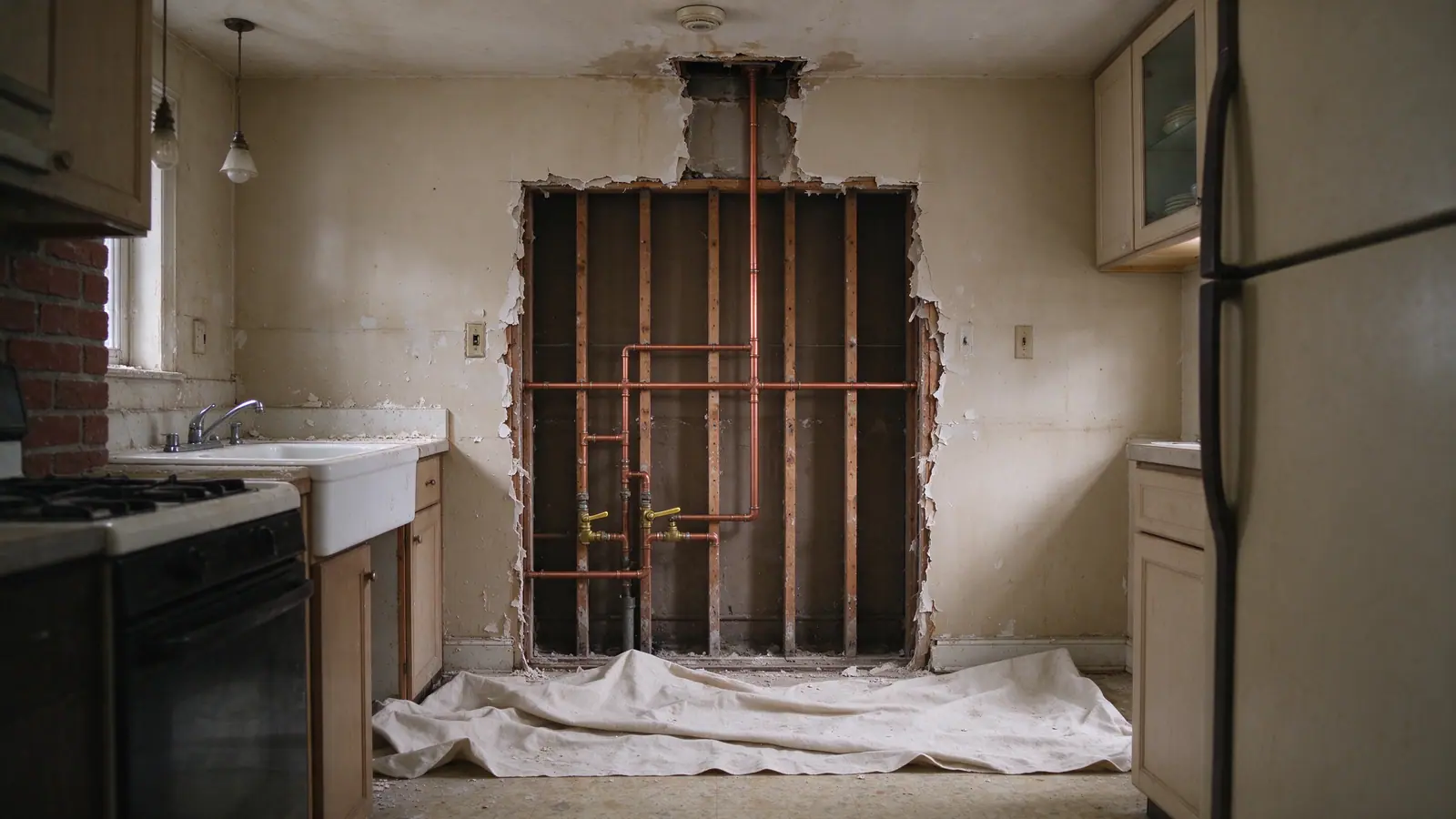
The symptoms split by floor. The upstairs unit loses pressure first, because rise costs pressure and rust narrows the pipe; the downstairs unit tends to get the leaks. Both together mean the system has failed, not one joint (low water pressure, galvanized pipe replacement).
One meter or two, and the tenant upstairs
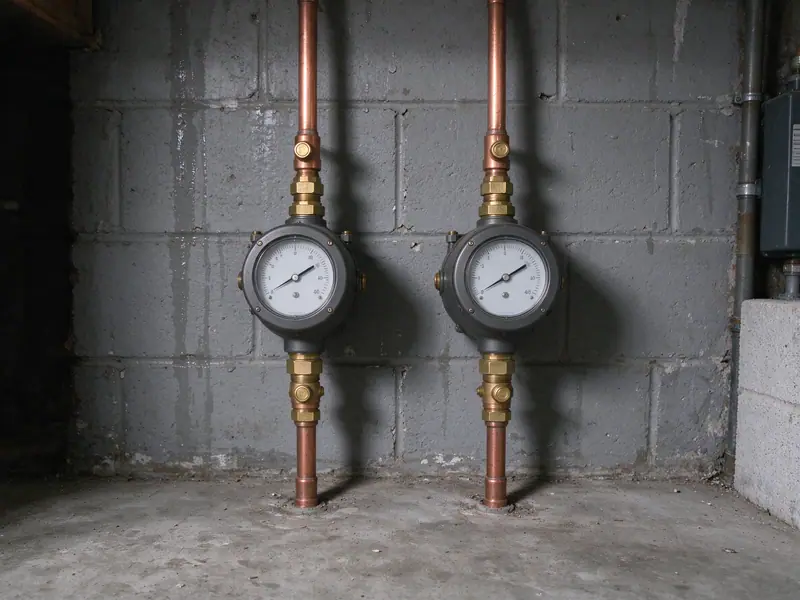
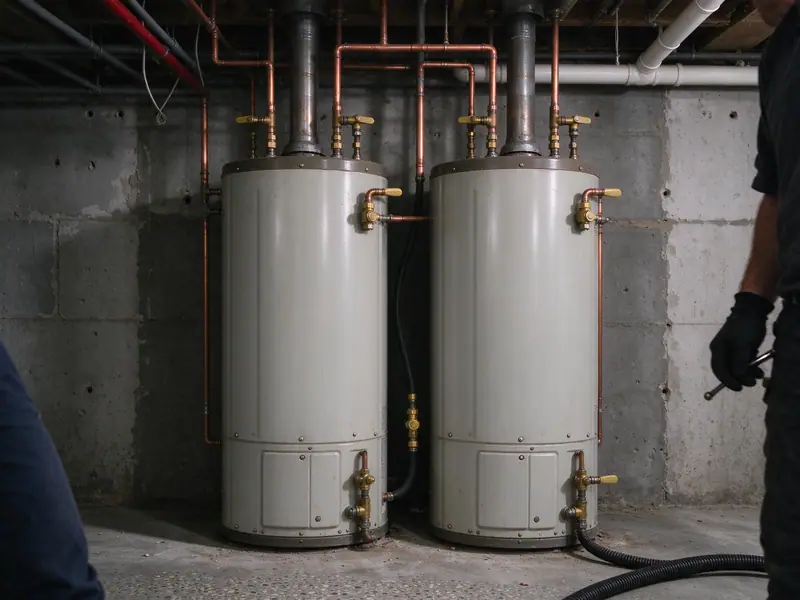
Some two-families have one water meter; some have two. With two, the new copper keeps each unit on its own meter and water heater; with one, the layout can be simpler. Where each unit has its own water heater, each gets its own hot line and shutoff, so one unit can be worked on while the other keeps hot water. The first visit settles which you have.
The tenant matters more than the pipe. NYC owners must provide hot water at a constant 120°F, 365 days a year (NYC HPD). Shutoffs are scheduled and short, the house is normally back on water at the end of each working day, and the job typically takes five to ten working days.
Copper, permits and the price
A Queens owner on a HeatingHelp thread asked whether to repipe a South Ozone Park two-family in copper or PEX. Inside NYC it’s copper: Table 605.4 doesn’t list PEX (copper vs PEX in NYC). Joints are soldered or permanent press; removable push-fit is prohibited (PC 605.9).
A two-family files as a 1–3 family LAA: $130 up to $5,000 of work, plus $2.60 per $1,000, so a $20,000 job carries a $169 fee. Unpermitted work draws penalties from $520. Published prices for a 2–3 story house run $12,000–$30,000+ (A Good Plumber). Buying? Read buying a house with galvanized pipes. For method and numbers, see whole house repiping and repiping cost in NYC.
What's included
- Type L copper supply for both units (ASTM B88)
- Each unit kept on its own meter and heater
- New shutoffs at every fixture and each unit
- Lead-free valves and fittings to NSF 372
- Dielectric or brass transitions where needed
- DOB NOW permit filed by a NYC Licensed Master Plumber
- Pressure test before walls are closed
- Shutoff schedule agreed for the tenant's unit
Weak pressure upstairs, leaks downstairs? Pressure readings in both units show whether it's one joint or the whole system. (929) 659-6658