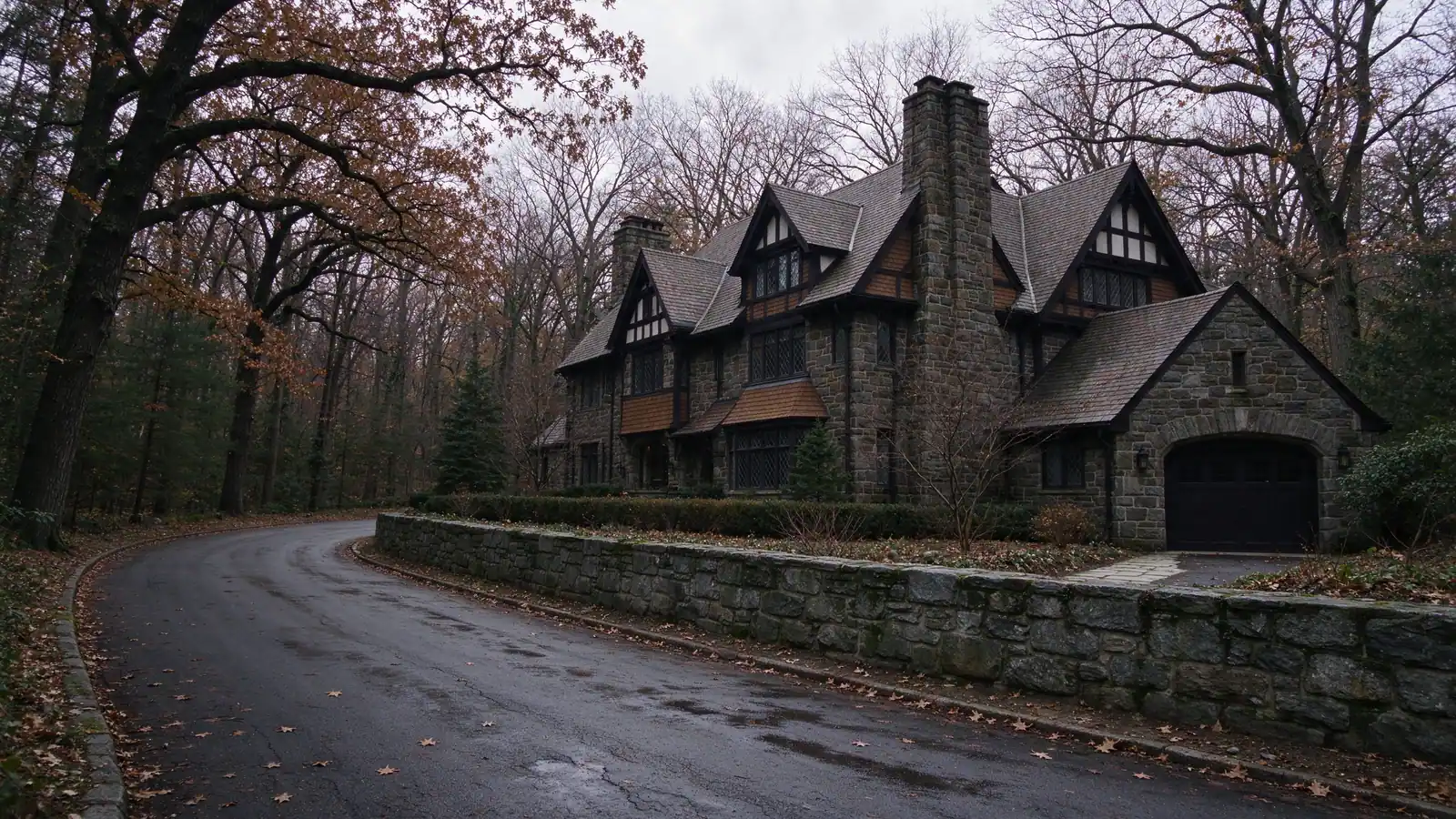
NYC Repipe & Repair handles repiping Riverdale owners need in two kinds of building. Fieldston and Hudson Hill have detached houses from the 1910s to the 1930s on curving private streets. Along Riverdale Avenue, the Henry Hudson Parkway and in Spuyten Duyvil there are brick co-op towers from the 1950s and 60s. Houses get new Type L copper from the service to every fixture. Co-op apartments get new branch lines, and boards get riser projects. Every job is filed in DOB NOW and priced in writing first.
What repiping in Riverdale actually involves
Riverdale's houses sit on some of the highest ground in the city. Fieldston was laid out by the Delafield family in 1909, after the subway reached Van Cortlandt Park, and its first house was finished in 1911. Its streets follow the hillside rather than a grid and are privately owned by the Fieldston Property Owners' Association, which also handles the sewers. The LPC designated it a historic district in 2006, with 252 houses, many of them Tudor, Colonial and Georgian Revival from the 1920s, 62 of them by Dwight James Baum (Wikipedia). Hudson Hill and the 1990 Riverdale Historic District hold older estate houses. The plumbing issues come from the terrain and the size of the houses. Long galvanized runs to bathrooms spread across two or three floors, and hilltop lots start with less street pressure, so a narrowed pipe shows up first as a weak upstairs shower. A Fieldston whole-house repipe also needs an LPC Certificate of No Effect.
The rest of Riverdale is apartments. Six-story brick buildings arrived in the 1950s, and 10- to 20-story towers followed in the early-to-mid 1960s, many designed by Philip Birnbaum, among them Skyview, the Windsors and the Whitehall. Most rentals converted to co-ops in the 1980s. These buildings are newer than Manhattan's prewar co-ops but are now 60 to 70 years old. Their risers and branch lines, whether late galvanized or early copper, have had six decades of soft, corrosive water. Pinhole leaks and stains in the apartment below are the common complaint, and the pinhole leak guide covers when repairs stop making sense. Above about six floors the towers run on pumps and roof tanks. Shareholders replace the branch lines to the riser valve, and boards plan riser work line by line. In eligible Bronx areas, DEP's free program can replace a house's lead or galvanized service line.